
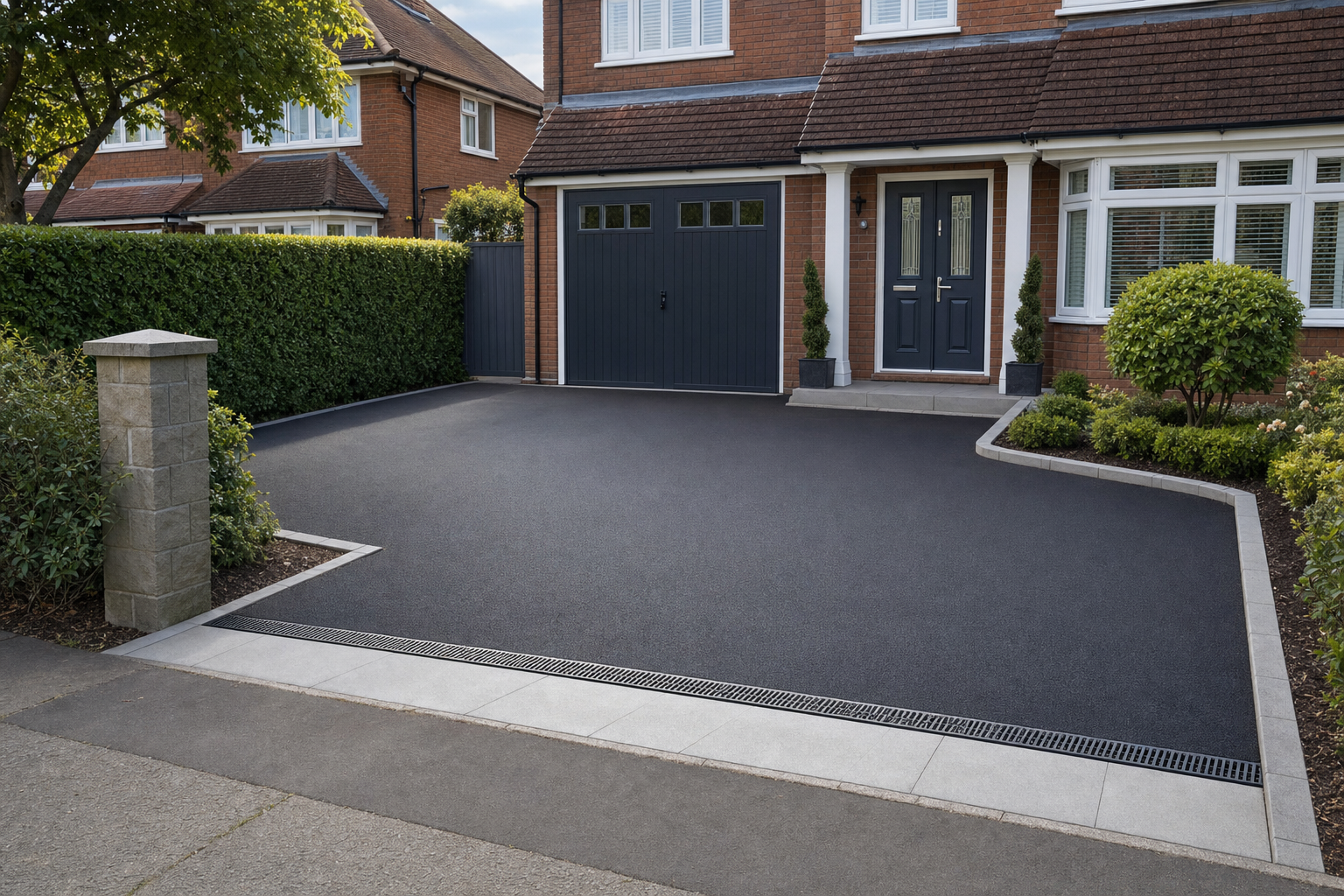
Why tarmac suits many driveways
Neat, durable finish
Tarmac gives a clean look and stands up well to regular comings and goings.
Edges kept secure
Kerbing and edge restraint help hold the shape and protect exposed sides.
Water guided away
Falls and drainage are planned with the driveway, not tacked on afterwards.
A practical surface for everyday vehicle use
Tarmac is a sensible choice when you want a clean, durable driveway without making the front of the house look fussy. It suits regular vehicle use, gives a neat finished line and works well where the real job is to create reliable parking rather than a decorative pattern. Before any tarmac goes down, we assess the site, dig out as needed and build a stable base that can carry daily traffic. With Royal Driveways and Landscapes, the plan also covers falls, drainage and edge restraint, because a tidy black surface is only useful if the water runs the right way and the edges stay protected.
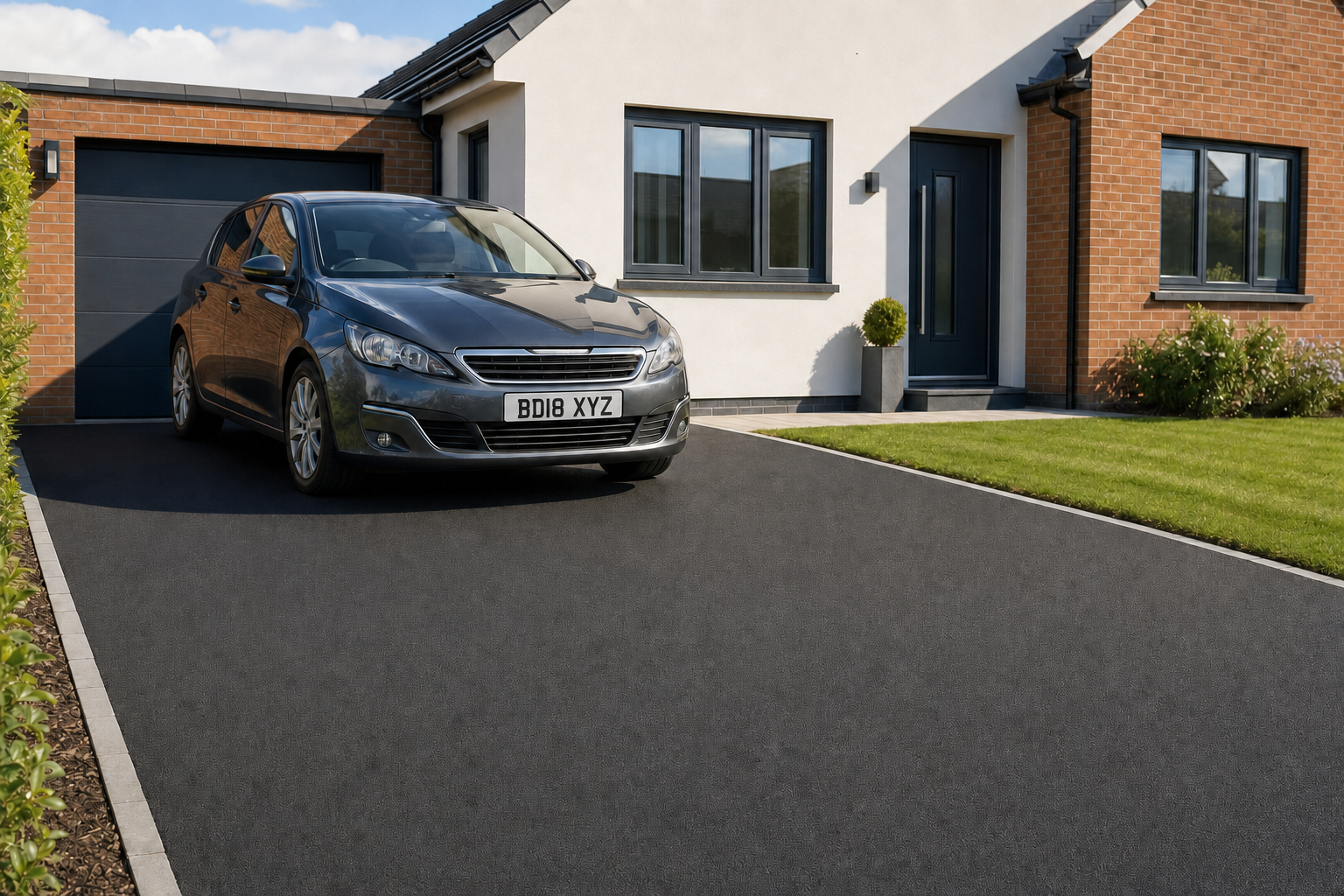

Kerbs, levels and aftercare matter
Good tarmac work is not just a case of laying material and hoping for the best. Kerbs can define the shape, support exposed edges and create a cleaner meeting point with paths, lawns or planted areas. We also look at how the driveway sits against thresholds and adjoining surfaces so rainwater does not head for the house or settle in low spots. Once laid, the new surface needs time to settle, so we will explain when it is safe to bring vehicles back onto it and how to avoid marking it early on.
Frequently asked questions
Is tarmac a good choice for everyday parking?
For many homes, yes. Tarmac gives a firm, tidy surface that copes well with regular vehicle use when the base underneath is built properly. It can be a particularly practical option if you want a straightforward finish that does its job without needing a decorative pattern.
Do tarmac driveways need kerbs or edging?
Not every layout uses the same detail, but some form of edge support is often important. Kerbs or other restraints help protect exposed sides, keep the shape crisp and create a cleaner transition to lawns, paths and borders around the driveway.
How soon can we drive on new tarmac?
A newly laid surface needs time before vehicles go back on it. The exact timing depends on the conditions and the job itself, so we explain what to avoid and when the driveway is ready for normal use. Rushing that stage can leave marks or disturb the finish.