
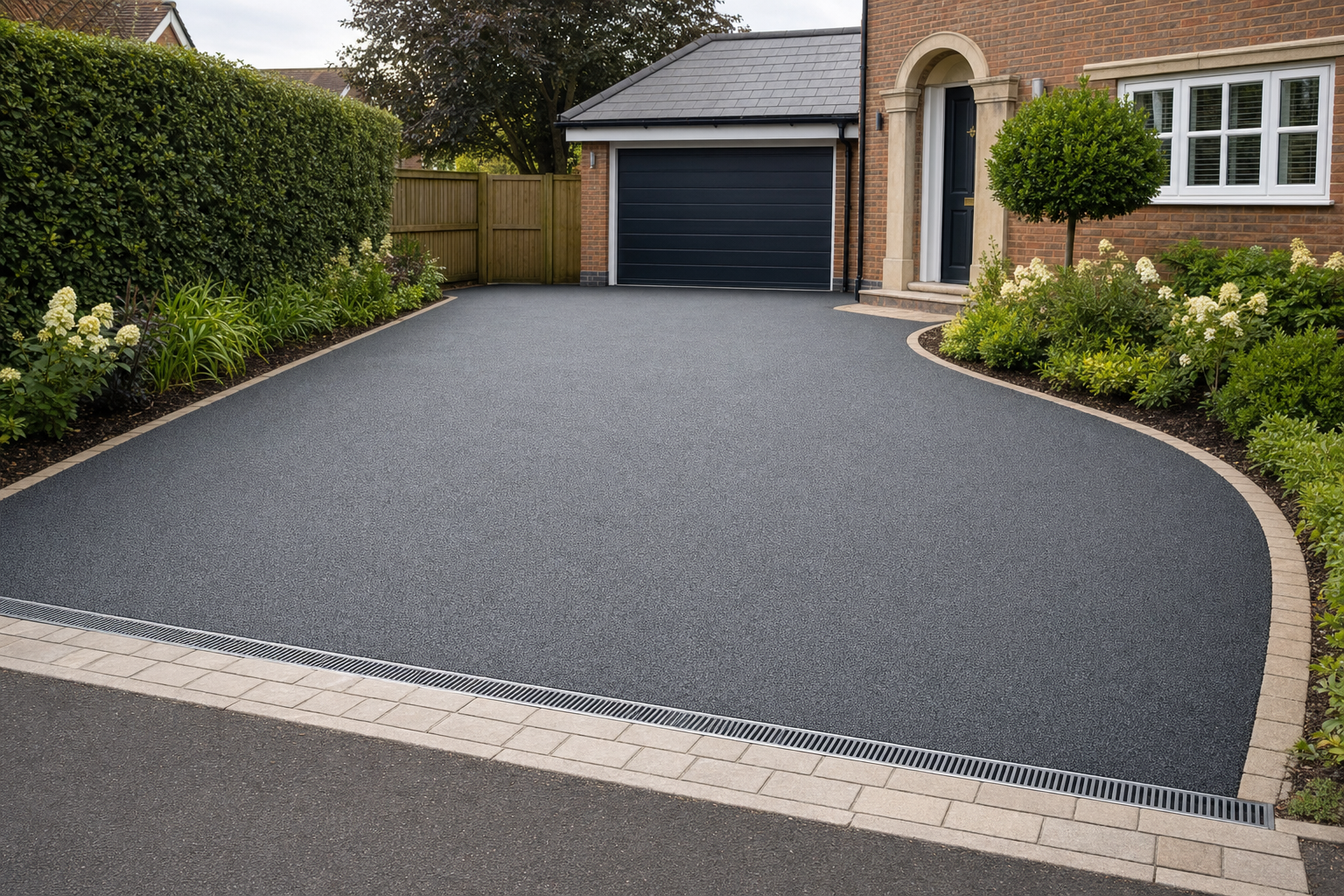
What resurfacing can put right
A worn top layer
Resurfacing can freshen a tired finish once the base condition is understood.
Untidy edges
Kerbing or edge repairs can sharpen the outline and support the renewed surface.
Local defects
Failed spots can be corrected before the new surface is laid over them.
Refresh the surface without guessing underneath
Driveway resurfacing can be a sensible way to renew a worn finish, but only after the existing surface and supporting base have been assessed honestly. Cracks, loose areas or tired edges may be limited to the top layer, or they may point to deeper movement and drainage problems that need more than a cosmetic fix. We start by looking at the condition of the drive, how it is wearing and how water behaves on it. With Royal Driveways and Landscapes, the resurfacing plan can then include cleaning, removing failed material, correcting local defects and adjusting edges before the renewed surface goes down.

The right repair depends on what caused the wear
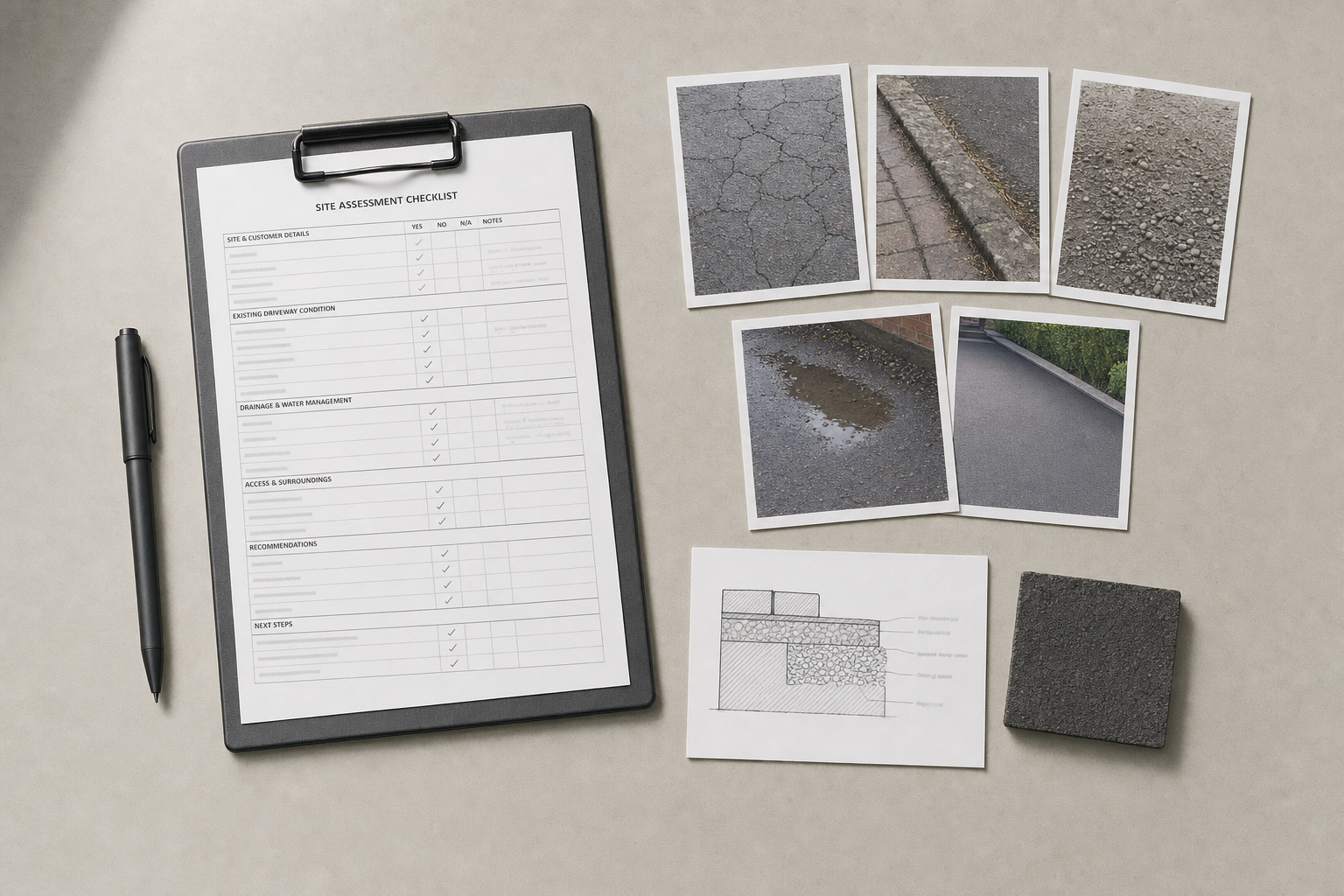
A driveway that simply looks tired needs a different approach from one that is sinking, breaking up at the sides or holding water in low spots. We consider access, the condition of the existing drive, transitions to adjoining surfaces and whether edge repairs or kerbing would improve the finished result. That helps avoid spending money on a fresh top layer where a more thorough repair is needed first. When resurfacing is the right route, the goal is a cleaner, more serviceable driveway that sits better and lasts longer than a quick patch-up.
Frequently asked questions
When is resurfacing enough for a driveway?
Resurfacing can work when the main problem is surface wear rather than deeper failure below. That is why we assess the base, levels and drainage first. If the underlying structure is sound, renewing the top layer may be sensible. If not, more preparation may be needed.
Can worn edges be repaired during resurfacing?
Yes, in many cases they can. Edge repairs or kerbing can improve definition and help support the renewed surface. That is worth considering if the driveway has started to crumble at the sides or no longer meets paths, borders or walls cleanly.
Will resurfacing solve puddles on a driveway?
Not always on its own. If pooling is caused by poor levels or drainage issues, those factors need to be considered as part of the job. Simply covering over the surface without dealing with the runoff is unlikely to give you the long-term improvement you actually want.