
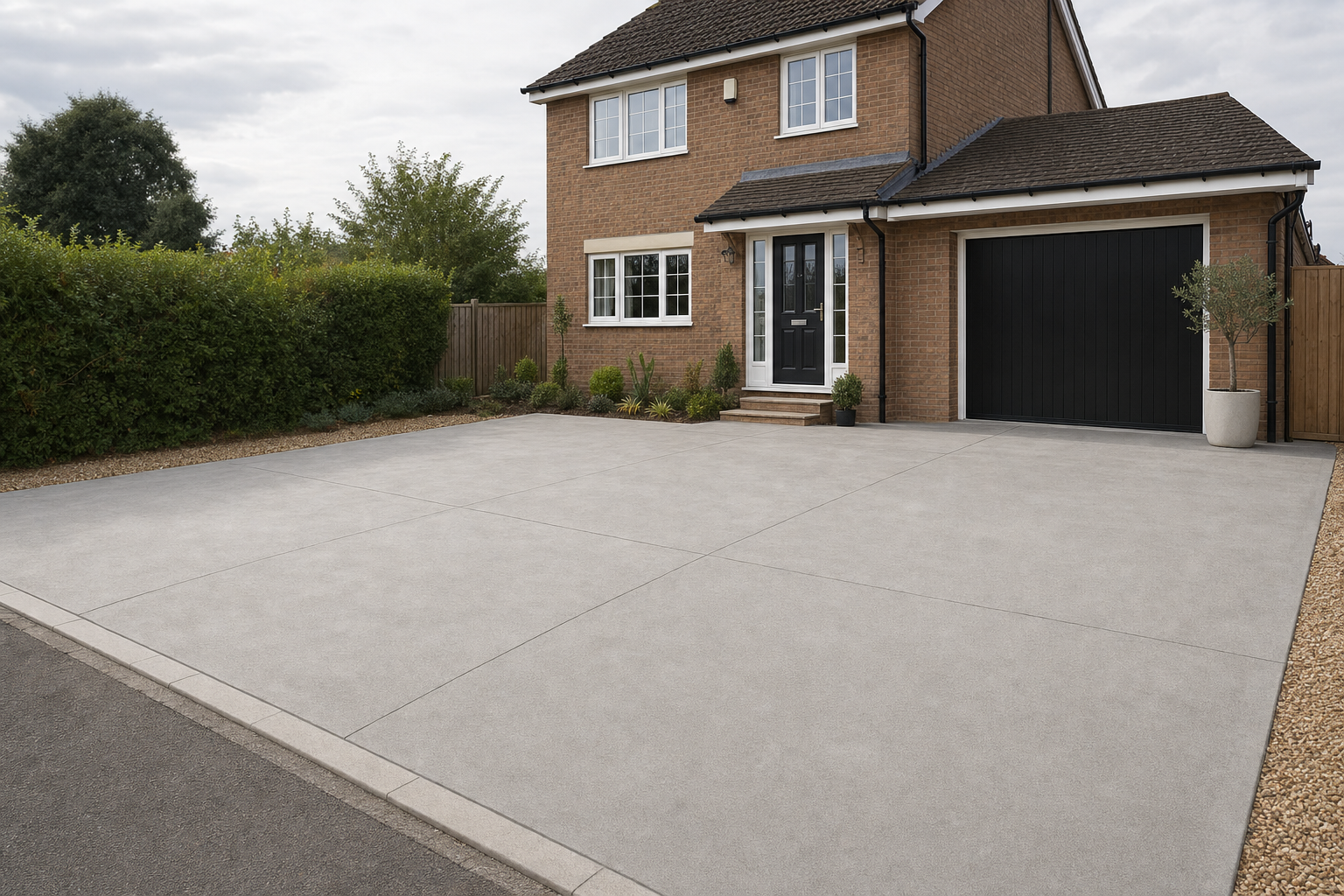
What concrete does well
Firm everyday surface
Concrete creates a strong, practical driveway for regular vehicle use.
Levels and joints planned
Formwork, falls and movement-control joints are set out before pouring.
Base built to support it
Proper compaction beneath the slab helps the finished drive stay sound.
A solid choice for regular vehicle traffic
Concrete is often chosen when you want a firm, durable driveway that can take everyday vehicle use and keep a clean, straightforward look. As with any hard surface, the finished result depends on the build beneath it as much as the material you see at the top. We start with excavation, then prepare the sub-base, set the formwork and plan the levels and falls so the drive sits properly and water is directed where it should be. With Royal Driveways and Landscapes, the job also takes in edge definition, slab layout and movement-control joints, because concrete needs to be planned as a system, not simply poured into an empty space.
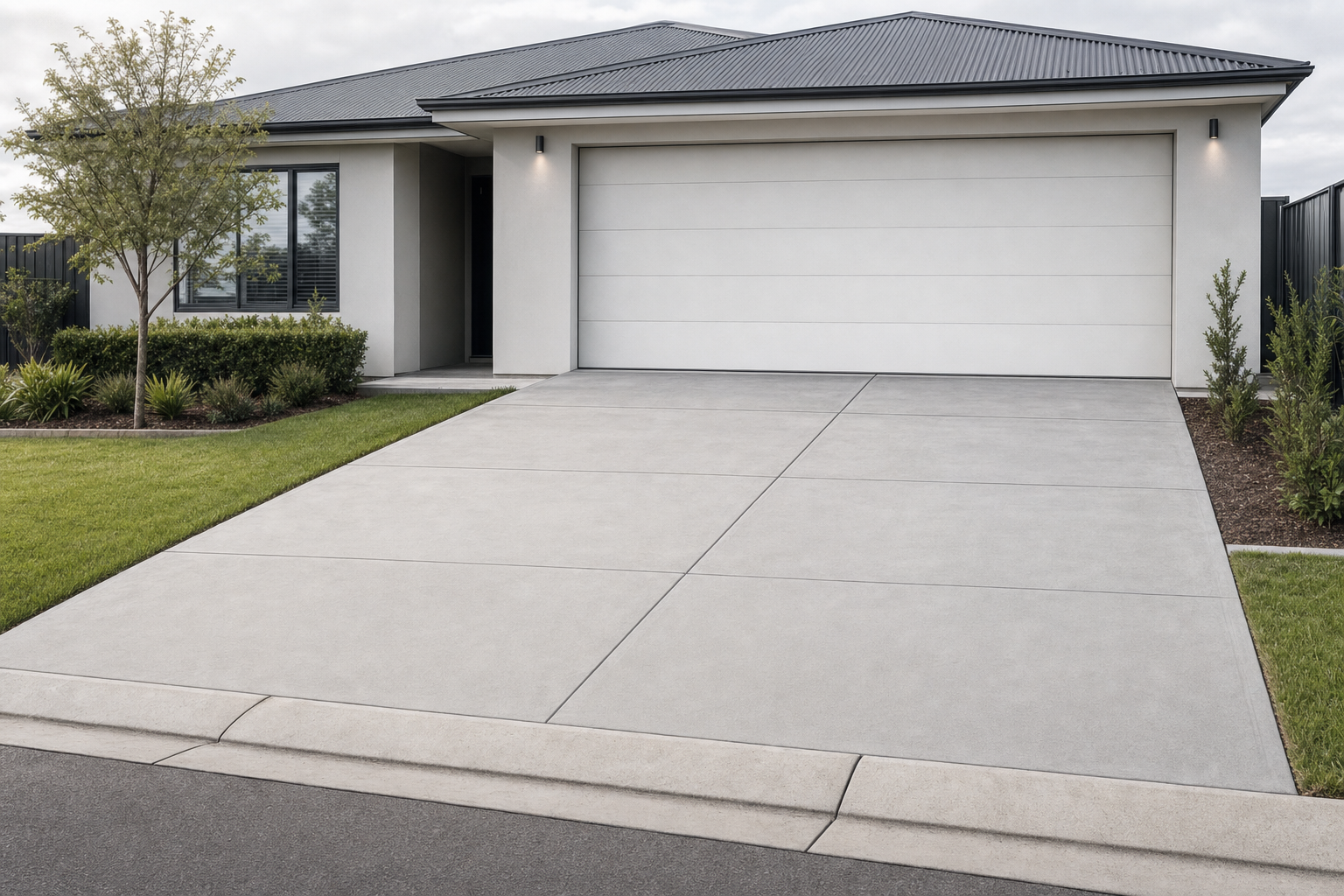

Curing is part of the job, not an afterthought
Once the concrete is placed and finished, it needs the right curing period before normal vehicle use begins. That stage matters just as much as the preparation, because bringing traffic back too soon can affect the surface. We also think about texture, how the drive meets adjoining areas and the way joints are set out across the slab. Combined with sound drainage and a properly compacted base, those details help produce a driveway that feels stable, serviceable and better suited to long-term use rather than quick appearance alone.
Frequently asked questions
Why choose concrete for a driveway?
Concrete is often chosen for its firm feel and durable performance under regular vehicle use. It also gives a clean, simple appearance. As ever, the real key is not just the material itself but the preparation underneath and the care taken during placing, finishing and curing.
Do concrete driveways need joints?
Concrete needs the layout planned carefully, and movement-control joints can be part of that approach. They help the slab work as intended and should be considered early, alongside the edge detail, levels and overall shape of the driveway.
How long before we can use a new concrete driveway?
A new concrete surface needs time to cure before vehicles are brought back onto it. We explain the waiting period for your job and why it matters. Giving the driveway that time is part of protecting the finish, not an optional delay added at the end.