
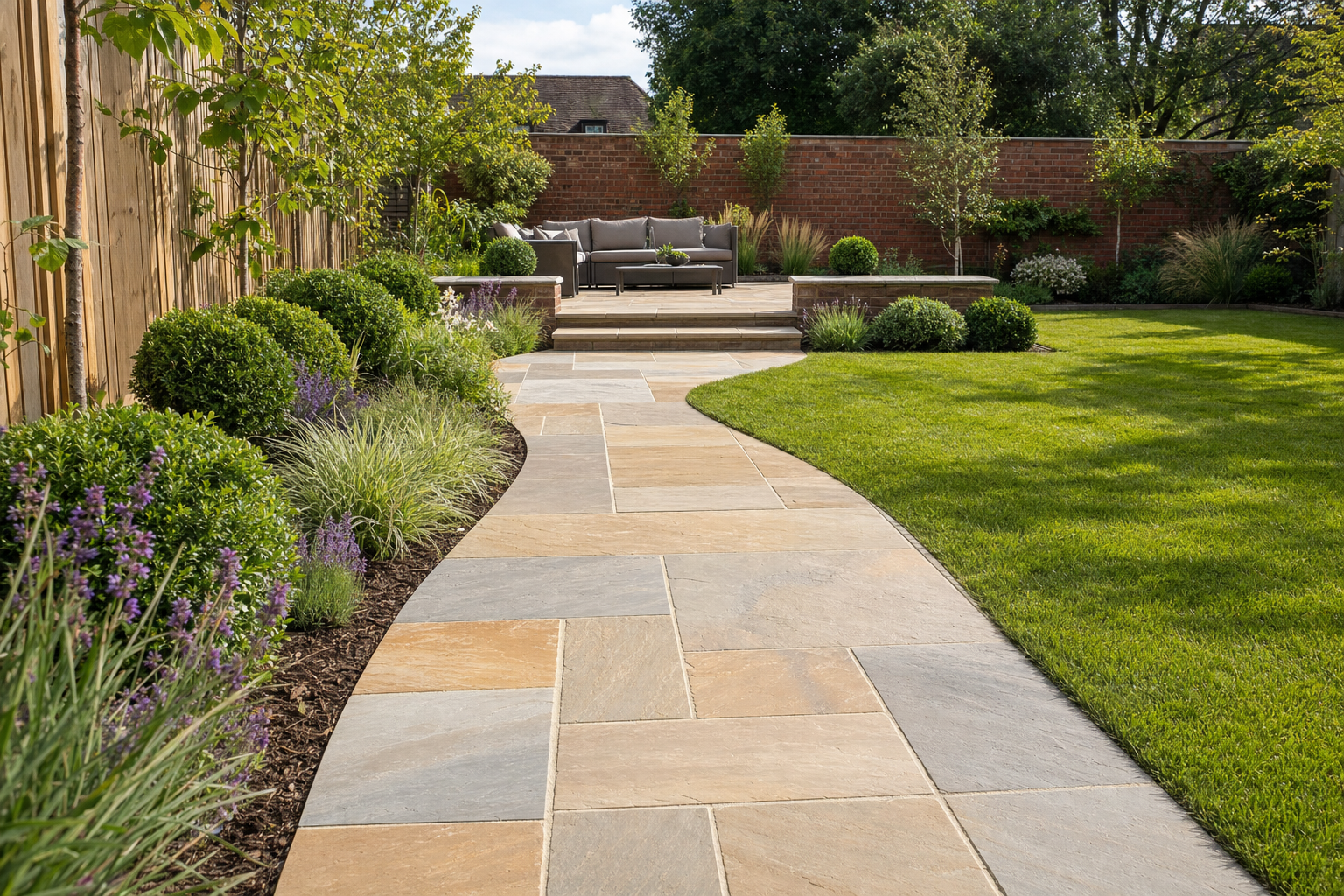
What a good path should achieve
A clearer route
The path gives you a practical line between doors, gates and garden features.
Stone with character
Indian sandstone, natural stone and marble each create a different feel.
Safer footing
Levels, falls and edge detail are planned for more secure everyday use.
Paths should guide you, not just fill a gap
A well-planned garden path does more than connect one point to another. It shapes how you move through the space, frames views, links entrances and makes the garden easier to use in wet weather as well as fine. The route, width and surface need to suit the way you walk through the property, whether the line is straight and formal or softer and more winding. We can build paths in Indian sandstone, other natural stone or marble, with the groundwork, setting out and jointing handled as part of the same job. With Royal Driveways and Landscapes, the path is planned for comfort and purpose rather than squeezed in after everything else.
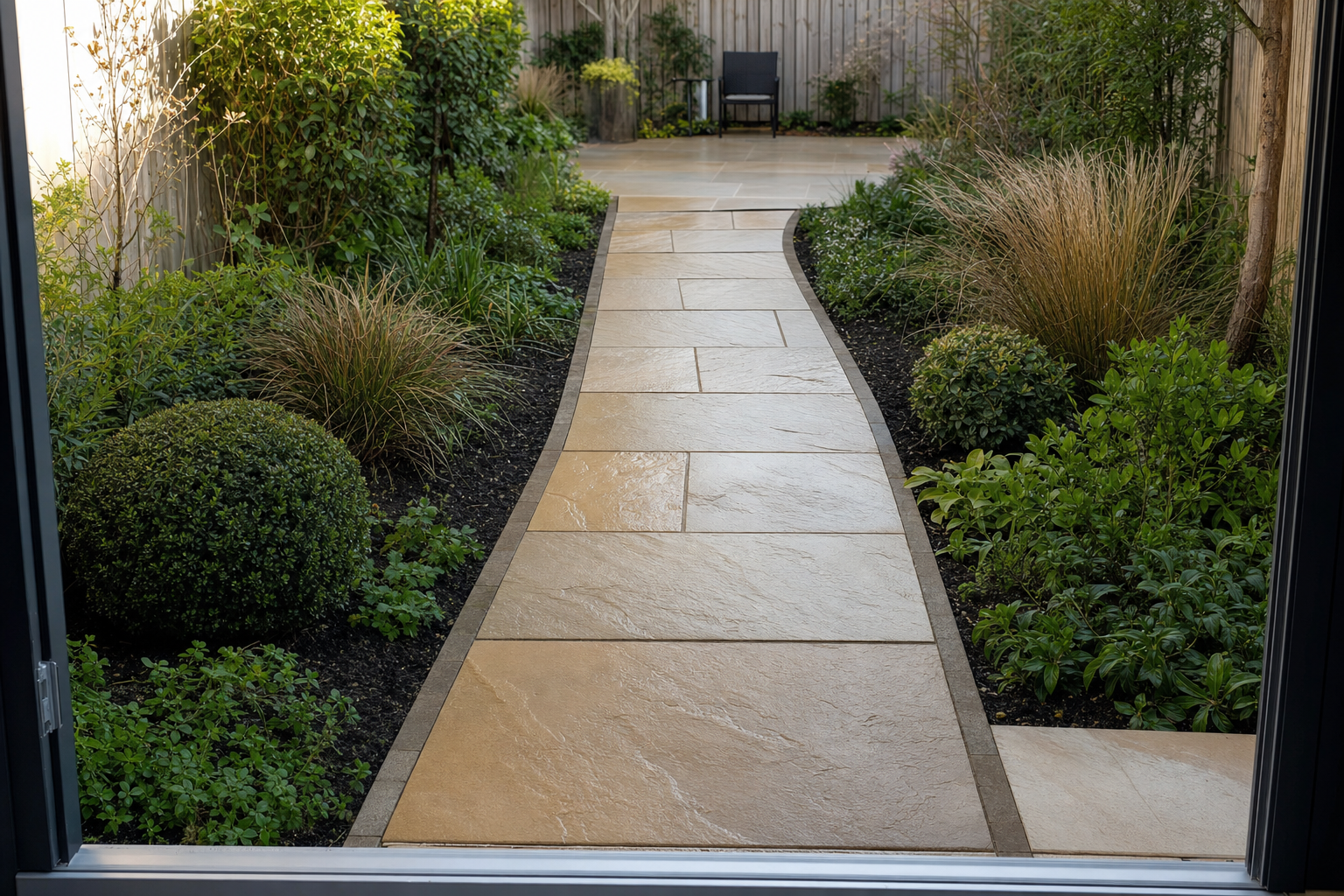

Levels, edges and footing all count
A path may seem simple compared with a driveway or patio, but it still depends on proper excavation, base preparation and careful control of levels and falls. We look at how it meets doors, steps, lawns and paved areas, because that is where awkward changes in height or drainage usually show themselves. Edge treatment, slab format and cutting detail also affect how natural the finished route feels within the garden. The result should be a path that is easy to follow, comfortable underfoot and visually tied into the rest of the outdoor space.
Frequently asked questions
How wide should a garden path be?
That depends on where it goes and how it will be used. A path to a gate or shed needs different proportions from one linking a house to a patio. We think about comfort, carrying items, nearby planting and the overall feel of the route before fixing the width.
Can a path be curved rather than straight?
Yes, if that suits the garden and the way you move through it. Curves can soften a layout, while straighter lines can feel more formal and direct. The important part is that the route feels natural and works well with the rest of the space around it.
Why do paths need falls and drainage?
Even narrow paved routes need water to run off correctly. Setting falls helps reduce standing water, slippery patches and awkward wet areas where the path meets doors, lawns or other surfaces. It is a small detail that makes a noticeable difference in daily use.