
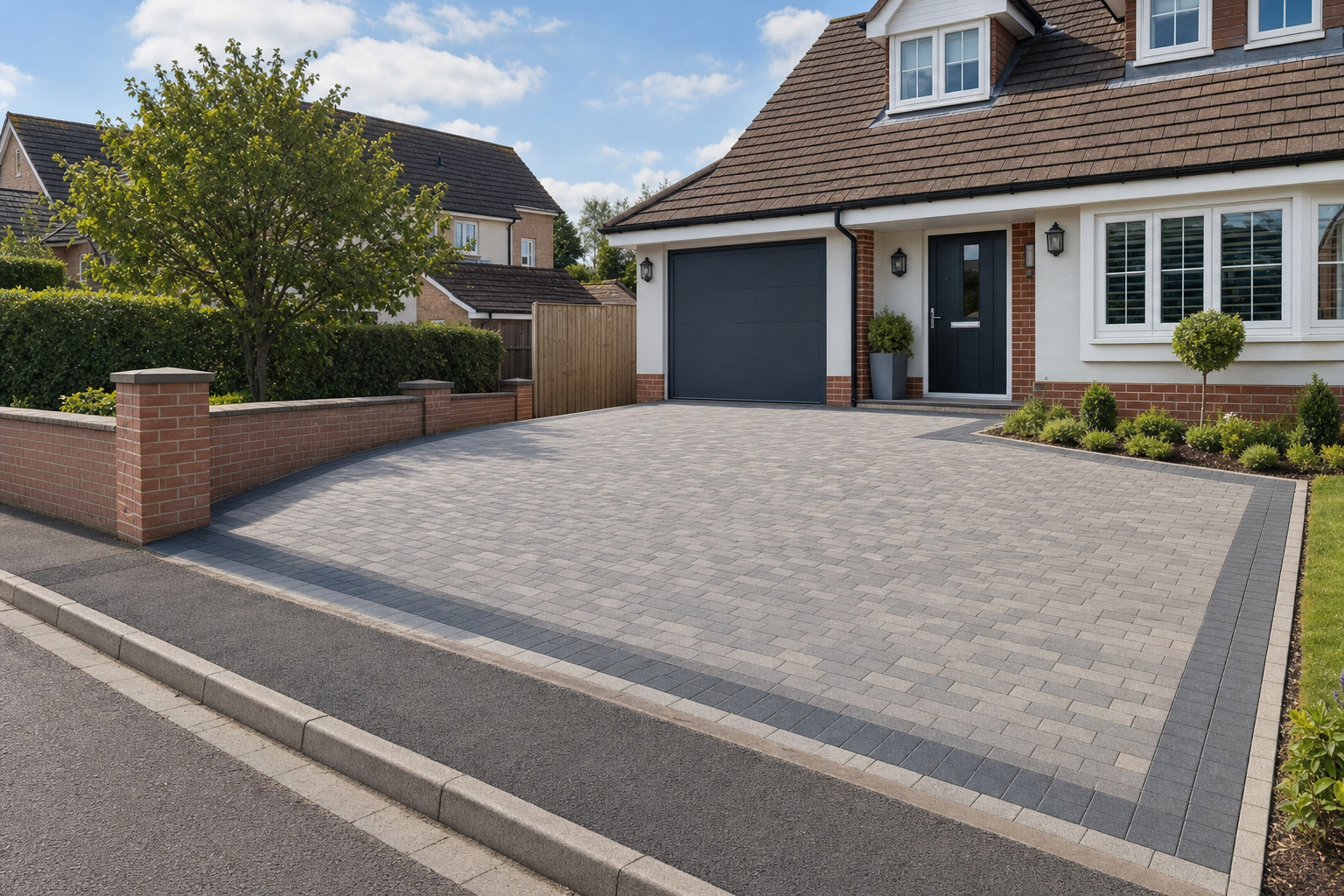
What block paving gives you
More layout choice
Patterns, colours and borders can be used to shape parking areas and entrances.
Defined edges
Kerbs and contrasting borders give the driveway a cleaner, sharper outline.
Repairable surface
Individual blocks can be replaced if damage happens in one local area.
A driveway with more design freedom
Block paving gives you more say over how a driveway looks. You can shape the layout, change the laying pattern, add contrasting borders and use kerbs to frame entrances or parking areas more clearly. The visible blocks may get the attention, but the hidden build-up matters just as much. We assess the site, excavate to the depth needed and form the sub-base, laying course and edge restraints before the paving is laid and jointed. With Royal Driveways and Landscapes, the aim is a driveway that suits the property and day-to-day use, not a pattern chosen first and made to fit later.
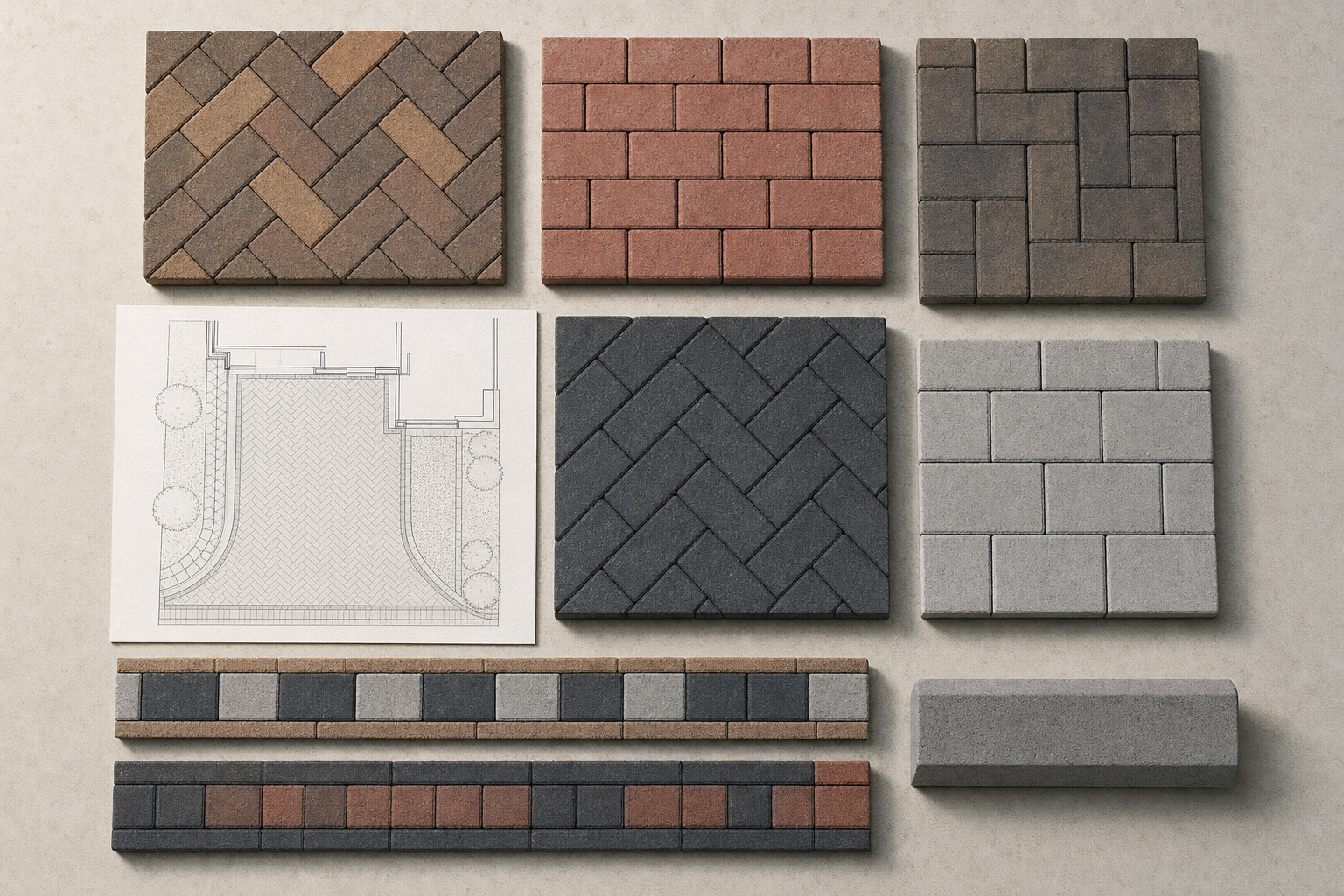

Practical choices make the finish last
Before colours and borders are finalised, we look at levels, drainage and how the driveway meets walls, paths and the road. That is what helps us judge where falls need to go and how the paving should be set out. It also helps you think about ownership after the job is done. Block paving can be kept looking right by maintaining the joints, dealing with weeds before they spread and replacing individual damaged blocks if that is ever needed. A smart pattern is useful, but a driveway that remains serviceable year after year is better.
Frequently asked questions
Can block paving be laid in different patterns?
Yes. One of the strengths of block paving is the choice it gives you. Different laying directions, colours and border details can change the feel of the driveway and help define entrances or parking spaces, while still working within the practical shape of the site.
Does block paving need maintenance?
It does need some routine attention. Keeping the joints filled, sweeping away build-up and dealing with weeds before they settle all help the driveway stay tidy. If one small area gets damaged, individual blocks can usually be replaced without disturbing the whole surface.
Why is drainage planned before the pattern?
Because the water still has to go somewhere, no matter how attractive the pattern is. We set out the levels, falls and edges first so the paving works properly in wet weather, then the final pattern can be chosen with those practical requirements already accounted for.